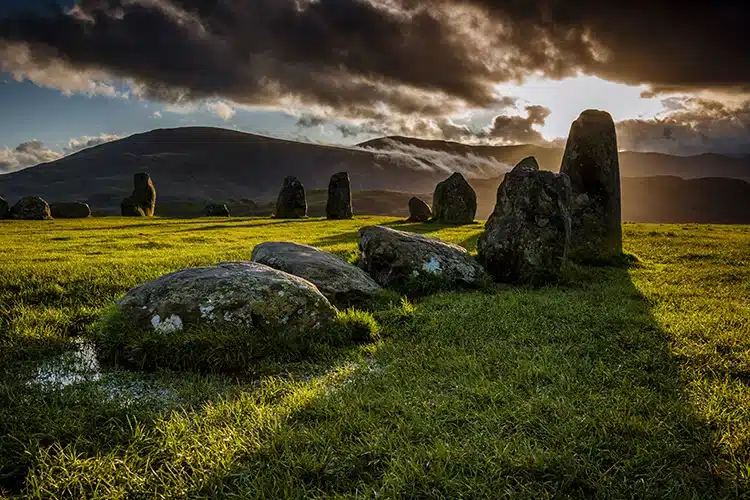
Castlerigg Stone Circle

Castlerigg Stone Circle

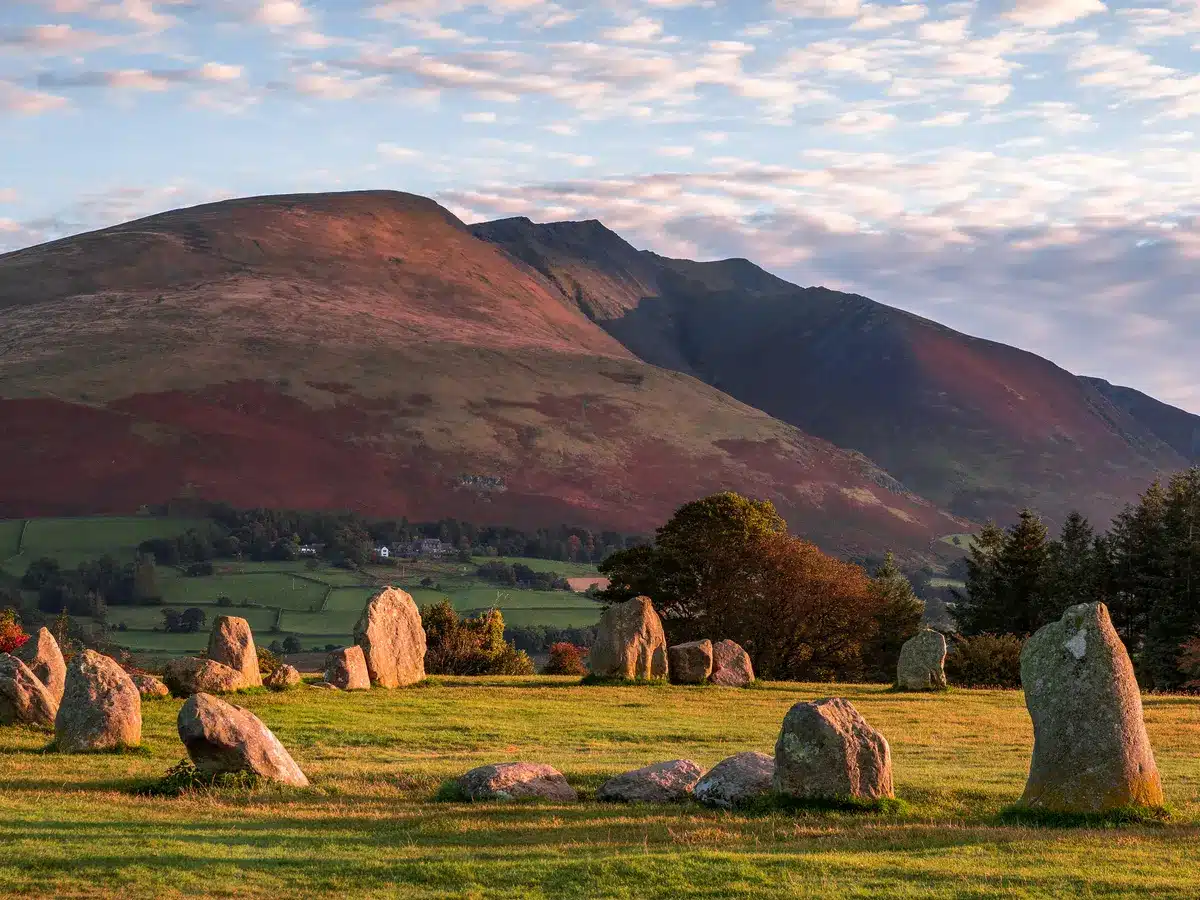
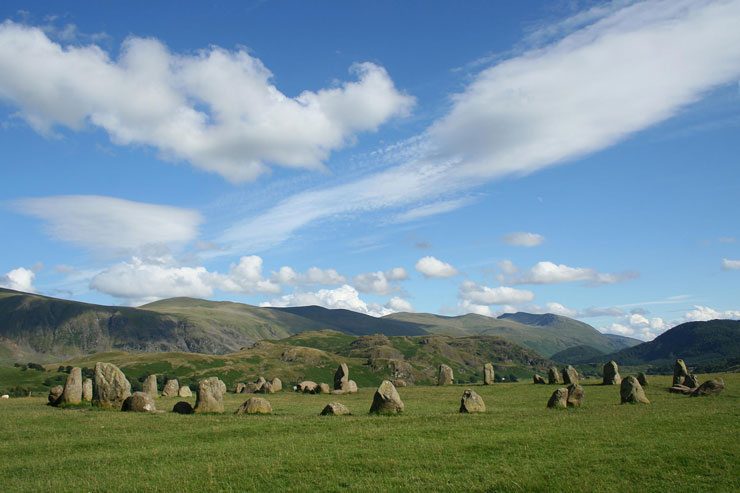
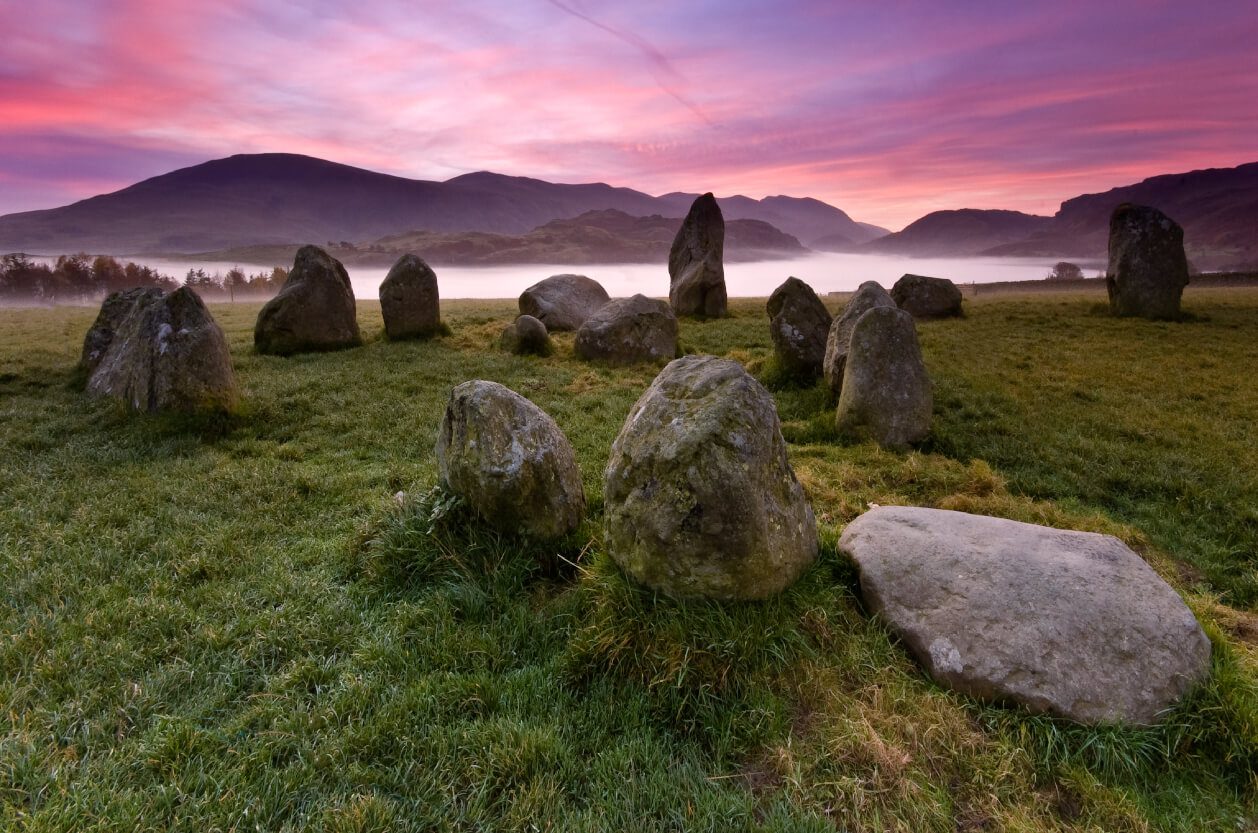
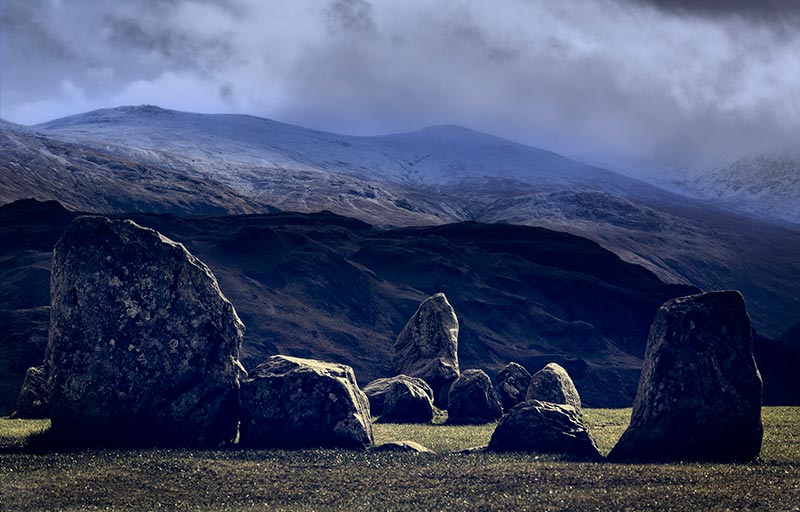
Castlerigg Stone Circle is a prehistoric monument located in the English Lake District near Keswick in Cumbria, England. It is one of the earliest and most visually impressive stone circles in Britain, dating back to the Neolithic period, around 3000 BC.

The circle consists of 38 large standing stones, with an additional 10 smaller stones forming a rectangular enclosure, known as a ‘sanctuary,’ within the circle. The tallest stone measures around 7.6 feet (2.3 meters) high, while the diameter of the circle is approximately 107 feet (32.6 meters).

Castlerigg Stone Circle is situated on a plateau surrounded by the stunning landscape of the Lake District, with breathtaking views of the nearby mountains, such as Skiddaw, Blencathra, and Helvellyn. It is believed to have been an important site for ceremonial and social gatherings during the Neolithic period, although its exact purpose remains a mystery.

The monument is managed by the National Trust and is freely accessible to visitors. The site’s picturesque location and historical significance make it a popular destination for tourists, history enthusiasts, and those seeking to experience the tranquility and beauty of the area.

Booking.com

More About Castlerigg Stone Circle

Castlerigg Stone Circle: A Mysterious Neolithic Monument in Cumbria

Castlerigg Stone Circle is a prehistoric monument located near Keswick in Cumbria, England. It is one of the most visually impressive and well-preserved stone circles in Britain, and is estimated to be over 5,000 years old. The circle consists of 38 stones arranged in an oval shape, with a diameter of approximately 32 meters.

The purpose of Castlerigg Stone Circle is not known for certain, but it is believed to have had both ceremonial and astronomical significance. The alignment of the stones is thought to correspond to the movements of the sun and moon, with some stones marking the positions of celestial bodies at different times of the year. The circle may have also been used for rituals and gatherings, and there is evidence of fires having been lit in the center of the circle.

History

The Castlerigg Stone Circle is one of the most important British stone circles. It is believed to have been constructed around 3000 BC, making it one of the earliest in the country. The monument was included in the Ancient Monuments Protection Act 1882, which included a ‘Schedule’ of 68 sites in Great Britain and Ireland, and it became one of the first scheduled ancient monuments. The following year, the stone circle was taken into state care.

Origins

The origins of the Castlerigg Stone Circle remain a mystery. It is not known who built it or why. However, the stones were most likely brought to the site from nearby outcrops, and it is thought that the circle was constructed in several phases over a period of hundreds of years.

Purpose

The purpose of the Castlerigg Stone Circle is also unknown. Some theories suggest that it may have been used as a religious site, a trading post, a meeting place, or an astronomical observatory. Others believe that it may have been used for ceremonies or rituals.

Despite the mystery surrounding its origins and purpose, the Castlerigg Stone Circle remains an important and fascinating monument. Its location, with panoramic views and the mountains of Helvellyn and High Seat as a backdrop, adds to its atmosphere and drama. It is a testament to the ingenuity and skill of our ancient ancestors, and a reminder of the rich history and heritage of the British Isles.

Myths and Legends

Castlerigg Stone Circle, like many ancient sites, is steeped in myths and legends that have been passed down through the ages. Here are a few:

One popular legend is that the stones were once giants who were turned to stone by a local wizard. The wizard was angry at the giants for refusing to convert to Christianity, so he used his powers to transform them into the standing stones we see today.

Another tale tells of a group of women who were dancing around the stones on a moonlit night. Suddenly, the stones came to life and began to dance with the women. The women were so frightened that they ran away and never returned.

There is also a belief that the stones possess healing powers. People would touch the stones and make offerings to the spirits that were said to reside there, hoping for a cure for their ailments.

Despite the lack of concrete evidence to support these legends, they continue to be told and passed down through generations. They add to the mystery and intrigue of Castlerigg Stone Circle, and make it a truly fascinating place to visit.

Ley Lines

Castlerigg Stone Circle is one of many ancient sites in the UK that are said to be connected by ley lines. Ley lines are hypothetical alignments of ancient sites, monuments, and natural landmarks that are believed to have spiritual and mystical significance. These lines are said to follow a straight or curved path and connect sites that share a common history, purpose, or energy.

Some people believe that Castlerigg Stone Circle is situated on a ley line that runs from St Michael’s Mount in Cornwall to the Norfolk Coast. This ley line is also said to connect other sites dedicated to the archangel Michael, such as Glastonbury Tor, Burrow Mump, and St Michael’s Mount in Cornwall.

While ley lines are not scientifically proven, they continue to fascinate and intrigue people who are interested in ancient history, spirituality, and the paranormal. Some researchers believe that ley lines were used by ancient civilizations to navigate and communicate with each other, while others think that they represent a form of earth energy or grid.

Regardless of their true nature, ley lines add an extra layer of mystery and mystique to Castlerigg Stone Circle and other ancient sites in the UK. Visitors can explore the circle and ponder the significance of its location and alignment, or simply enjoy the natural beauty and peaceful atmosphere of the surrounding landscape.

Location and Access

Castlerigg Stone Circle is located in the Lake District National Park in Cumbria, England. It is situated about 1.5 miles east of Keswick and can be accessed by car or bus.

Directions

If you are driving to Castlerigg Stone Circle, you can use the postcode CA12 4RN for your satellite navigation system. From Keswick, take the A591 towards Windermere and turn left onto Castle Lane. Follow the road for about half a mile, and the circle will be on your right.

If you are taking public transportation, the Stagecoach ‘Caldbeck Rambler’ service 73A passes the site on Saturdays only. Otherwise, you can take the Stagecoach 555 or X8 (also on Saturdays only) to Castle Inn, which is about a 20-minute walk from the circle.

Parking

Free car parking is available in a layby near the gate to the field. However, the parking area can get crowded during peak season, so it is recommended to arrive early or use public transportation if possible.

Visiting Castlerigg Stone Circle

Visiting Castlerigg Stone Circle is a unique experience that offers a glimpse into the past and a connection to nature. The site is located just outside the town of Keswick in the Lake District National Park and is easily accessible by car or bus.

Summer Solstice

One of the best times to visit Castlerigg Stone Circle is during the summer solstice, which occurs around June 21st each year. During this time, the sun rises directly over the stones, creating a stunning visual display. Visitors can join in on the celebrations, which include music, dancing, and other festivities.

Walks

For those who enjoy walking, there are several routes that lead to Castlerigg Stone Circle. One popular option is the Keswick to Castlerigg Stone Circle walk, which takes about an hour to complete. The route offers breathtaking views of the surrounding mountains and countryside.

Another option is the Castlerigg Stone Circle Walk, which is a circular route that starts and ends at the site. The walk is about 1.5 miles long and takes around 45 minutes to complete. Along the way, visitors can enjoy stunning views of the surrounding landscape and learn about the history of the site.

Camping

For those who want to stay close to Castlerigg Stone Circle, there are several camping options available. The site itself does not allow camping, but there are several campsites located nearby. One popular option is the Castlerigg Hall Caravan and Camping Park, which is located just a short walk from the stone circle. The site offers stunning views of the surrounding mountains and is a great place to relax and unwind.

Overall, visiting Castlerigg Stone Circle is a must-do activity for anyone visiting the Lake District National Park. Whether you’re interested in history, nature, or just want to experience something unique, this site has something for everyone.

Conclusion

Castlerigg Stone Circle is a fascinating and ancient monument that has stood the test of time. Its construction and purpose remain a mystery, but the site’s historical significance and natural beauty make it a must-visit location for anyone interested in ancient history, archaeology, or simply enjoying a stunning view.

Despite its age, the site is well-preserved and easily accessible, making it a popular destination for tourists and locals alike. Visitors can take in the breathtaking views of the surrounding mountains and countryside while contemplating the mysteries of the past.

While the site has been studied extensively, there is still much to learn about Castlerigg Stone Circle and its place in history. The ongoing research and preservation efforts ensure that this ancient monument will continue to be a source of fascination for generations to come.

Highly Recommended Hotels Nearby

Skiddaw Hotel Keswick

Skiddaw Hotel

The Skiddaw Hotel in Keswick is a newly refurbished four-star hotel located in the heart of the picturesque market town of Keswick. The hotel offers

Armathwaite Hall Hotel

Armathwaite Hall Hotel & Spa

Armathwaite Hall Hotel & Spa is a luxurious four-star country house hotel located in the heart of the Lake District in Cumbria, England. Nestled between

The Daffodil Hotel and Spa

The Daffodil Hotel and Spa

The Daffodil Hotel and Spa provides modern elegance on the banks of Grasmere water, in the heart of The Lake District and only a short

Nearby Attractions

Derwent Pencil Museum

Derwent Pencil Museum

The Derwent Pencil Museum is a unique museum dedicated to the history and art of pencil making. It is located in Keswick, a small town

Derwent Water

Derwent Water

Length (km) Max Width (km) Area (km²) Volume (m³) Mean Depth (m) Max Depth (m) Surface Elevation (m) Derwent Water is a beautiful lake located

Whinlatter Forest Park

Whinlatter Forest

Whinlatter Forest is a true gem of the Lake District, located in Cumbria, England. It is the only mountain forest in the country and offers

Latest News