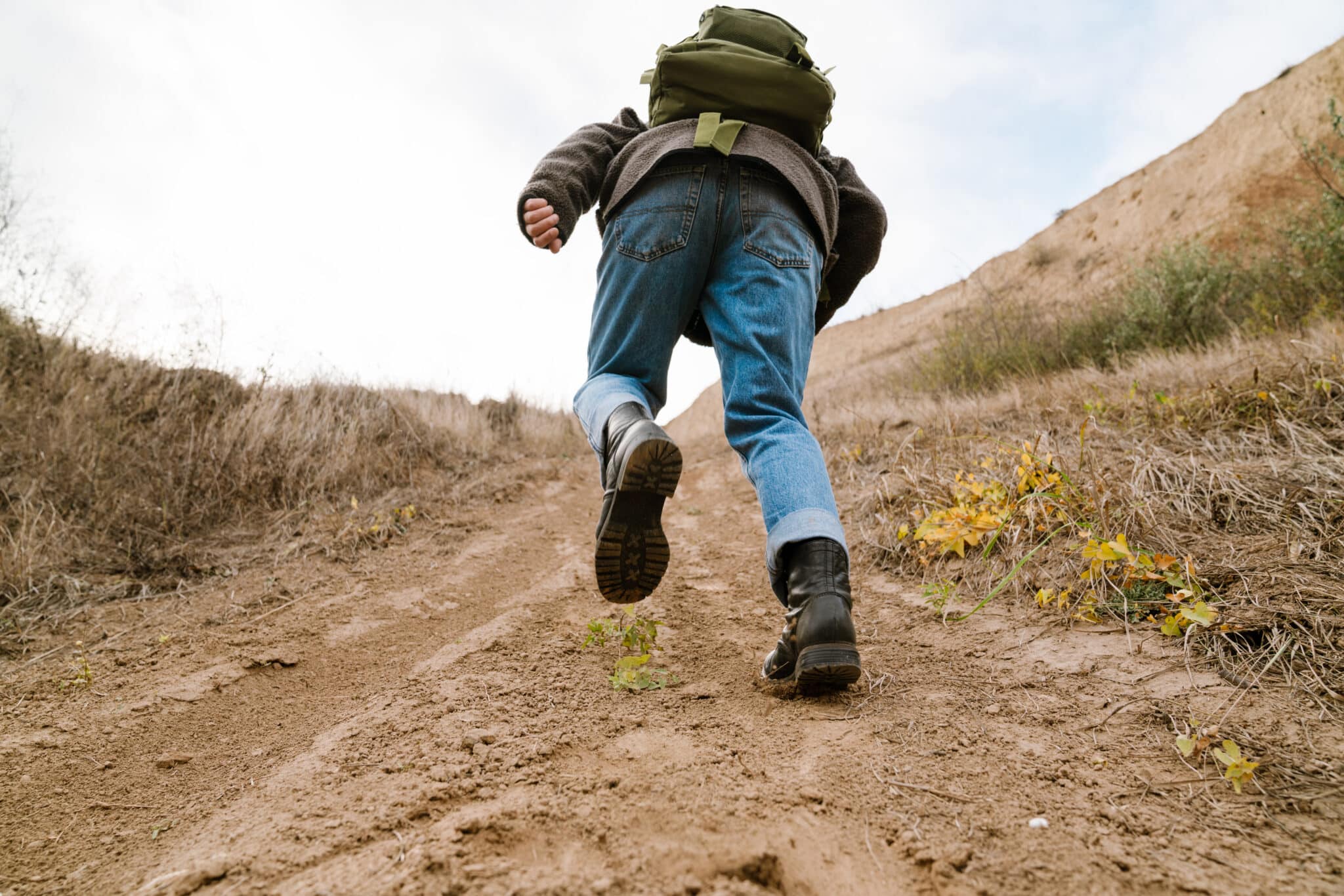
Best Scrambling Boots for the Lake District
Understand what makes an approach boot suitable for rocky mountain routes, how to choose a secure fit and when specialist footwear or skills are needed.
Scrambling combines steep walking and sometimes the use of hands on rock. A specialist approach boot may offer more precise foot placement and protective construction than an ordinary soft walking boot, but no footwear removes the risks of exposure, slippery rock or poor route choices. Fit, conditions and experience matter as much as the brand.
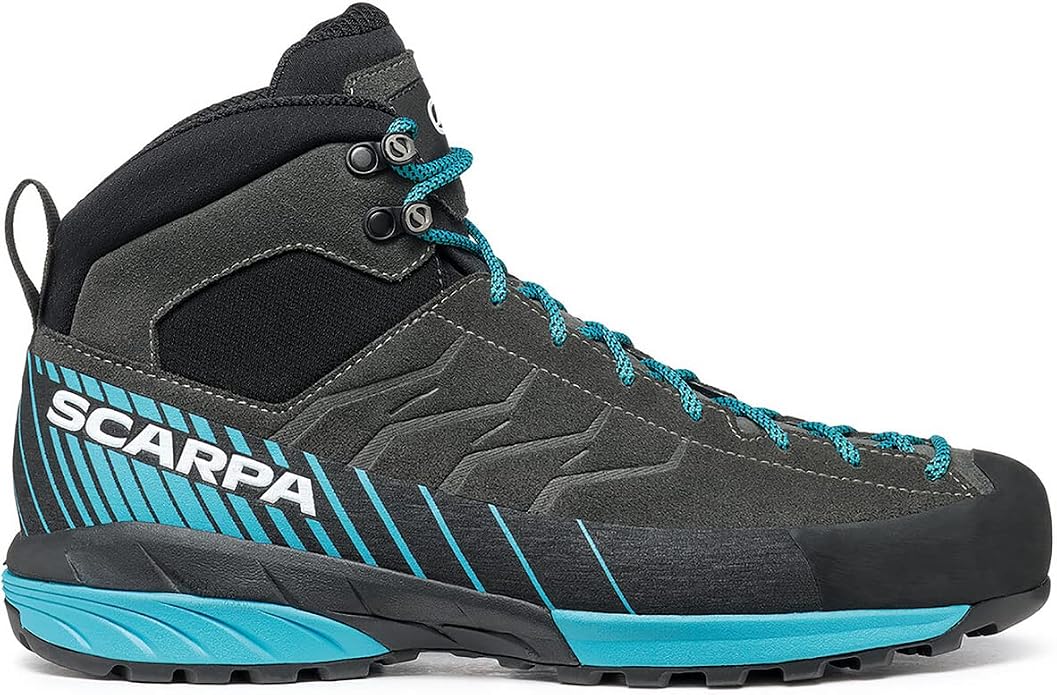
Technical approaches: Scarpa Mescalito
Technical mountain approach footwear
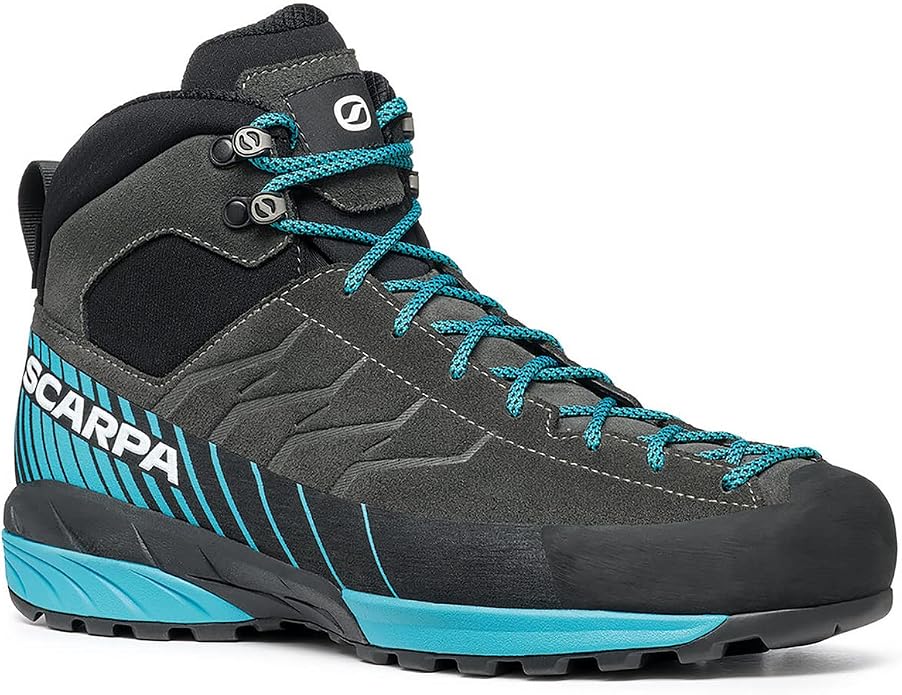
Scarpa Mescalito Approach Boots
The Mescalito family is designed for technical approaches and scrambling, with lacing extending towards the toe to help adjust the fit and protective materials around areas commonly scraped on rocky terrain. Scarpa’s Mescalito Mid GTX model specifically uses a waterproof GORE-TEX membrane, a suede upper, toe protection and a Vibram Megagrip outsole. However, the Amazon link is titled more generally as Scarpa Unisex Mescalito Mountain Boots; confirm that its selected size and variation are the Mid GTX model before relying on those features.
- Best use: rocky mountain approaches and suitable scrambling routes in experienced hands
- Fit: extended lacing helps tune fit around the forefoot; allow adequate toe room on descents
- Protection: protective toe and side rand features vary across Mescalito versions
- Mid GTX model: Scarpa specifies GORE-TEX Extended Comfort waterproof lining, Vibram Megagrip outsole and a 515g weight per boot in size EU 42
- Check the variation: the linked Amazon listing should be checked for exact model name, cut height, GTX membrane, outsole, colour and selected shoe size
- Limitation: approach boots are not automatically appropriate for snow or ice and must not be assumed crampon-compatible
Protective grip for rocky approaches: La Sportiva TX4 Evo Mid GTX
Waterproof technical mid-height approach boots
La Sportiva TX4 Evo Mid GTX
The TX4 Evo Mid GTX is designed for rocky approach walks and technical mountain terrain. Its mid-cut ankle design balances protection with movement, while the protective rubber edging and climbing-zone outsole make it particularly interesting for walkers who tackle suitable Lake District scrambles.
- Upper: suede leather with protective rubber trim and reinforced toe
- Waterproofing: GORE-TEX Extended Comfort lining; maintain the outer leather and DWR finish according to the manufacturer’s instructions
- Outsole: Vibram Megagrip rubber with La Sportiva’s Impact Brake System and a climbing zone at the toe for careful foot placement
- Fit: climbing-derived lacing allows a close adjustment over the forefoot; try on with mountain socks and check heel hold and downhill toe room
- Ankle: flexible mid-cut collar is designed to support movement on broken terrain
- Repairability: La Sportiva Resole Platform is designed to allow outsole replacement by a suitable specialist
- Weight: manufacturer’s men’s size EU 42 specification is approximately 480g per boot; weight varies with size
- Limitations: approach footwear is not a substitute for winter mountaineering boots on snow or ice; do not assume crampon compatibility
For longer mountain approaches: Salewa Mountain Trainer Mid GTX


Protective mountain walking and approach boot
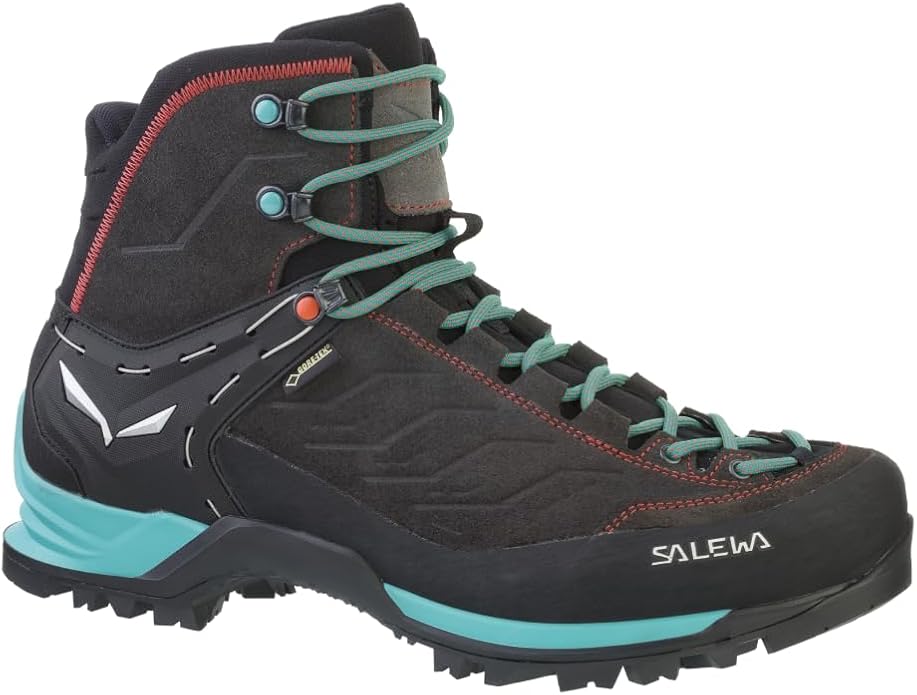
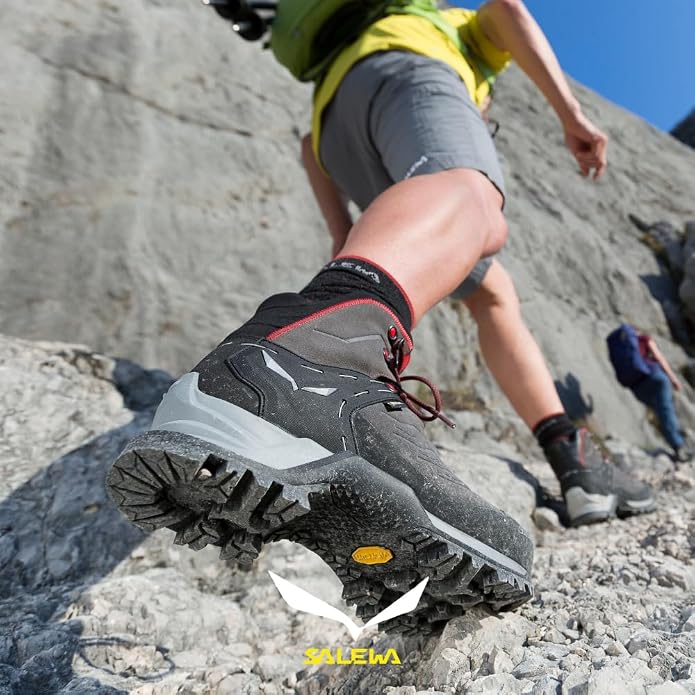
Salewa Mountain Trainer Mid GTX
The Salewa Mountain Trainer Mid GTX is designed for demanding mountain approaches and rocky walking, combining a supportive mid-height boot shape with protection around the lower upper and a technical outsole. It is a useful alternative for walkers who want a more substantial feel on steep and uneven ground, provided the fit and conditions are suitable.
- Waterproofing: GORE-TEX lining intended to help keep out rain and wet ground conditions while allowing moisture vapour to escape
- Upper and protection: durable suede-style leather construction with protective rubber rand; confirm material details for the linked colour and version
- Heel fit: Salewa’s 3F system is designed to help support the heel and ankle area while retaining flexibility
- Lacing: climbing-style lacing extending towards the toe for more precise forefoot adjustment
- Outsole: technical Vibram sole with a climbing zone intended to aid careful foot placement on rock; outsole specification may differ between model years
- Best suited to: long mountain approaches, rough walking routes and appropriate easy scrambling in suitable weather
- Try before buying: check forefoot width, downhill toe clearance and heel security with the socks you actually use
- Important limitation: not a replacement for winter mountaineering boots; check the exact model and equipment compatibility before attempting snow or ice routes
How to choose scrambling boots
Grip and foot placement
Look for a sole that balances traction, durable rubber and control on small rocky footholds. Even good rubber can slip on wet, polished or loose rock; adjust your plans to the conditions.
Protection and fit
A protective toe bumper and side rand help resist abrasion. Try footwear with your usual walking socks, test the heel hold and ensure your toes do not jam against the front on descents. Higher cut alone does not guarantee ankle-injury prevention.
Match the footwear to the route
Approach-style footwear can be effective on dry or damp rock, but may be unsuitable for prolonged winter snow, ice or use with crampons. Choose boots compatible with the conditions and equipment required for your route, and seek qualified advice for winter mountaineering.
Affiliate disclosure: As an Amazon Associate, we earn from qualifying purchases. Exact product variations, specifications and availability can change.
Editorially updated November 2026.

“One more fell from a great mood…” Chris writes for numerous online publications, having studied at The University College of North Wales, Bangor. He is regularly in The Lake District and enjoys wild camping, hiking and watersports. His favourite location? Muncaster Castle…