

Scafell Pike is England’s highest mountain at 978 metres, but a winter ascent is not simply a summer walk with colder weather. Snow, ice, poor visibility, strong wind and short daylight hours can make the summit and descent serious mountaineering terrain. This guide explains how to decide whether to attempt Scafell Pike in winter, what skills and kit you need, and when to choose a lower walk instead.
Important safety advice: This article is not a route plan or a substitute for winter mountaineering training. If snow or ice is likely on your route and you cannot competently use an ice axe and suitable crampons, navigate in poor visibility and assess winter hazards, do not attempt the summit independently. Consider a qualified winter mountaineering instructor or guide instead.
Is it safe to climb Scafell Pike in winter?
There is no single answer based on the calendar. Conditions in November can be wintry high on the mountain, while a milder day later in the season may be free of snow. The key is the actual weather, ground conditions, route and competence of everyone in your group.
Before committing, ask yourself:
- Conditions: Is there snow, hard ice, a forecast freeze, poor visibility or strong summit wind? Could conditions worsen during the descent?
- Skills: Can everyone use map and compass confidently if paths and cairns disappear in cloud or snow? Where required, are you trained and practised in ice-axe arrest, crampon movement and assessing steep snow or avalanche-prone terrain?
- Equipment: Do your boots and crampons work together? Do you have appropriate warm, waterproof and emergency equipment?
- Time: Have you allowed a generous margin before darkness, including a slower-than-expected descent?
- Decision: Does the whole group have an agreed turnaround time and a willingness to abandon the summit?
If any answer is uncertain, choose a lower-level walk or a guided skills day. Reaching the summit is optional; getting everyone home safely is essential.
Check mountain forecasts and ground conditions
Use a dedicated Met Office Lake District mountain forecast and the Mountain Weather Information Service (MWIS). Look at wind speed and gusts, freezing level, wind chill, precipitation, cloud base and visibility, not just the valley forecast or a weather icon.
The Lake District National Park’s Weatherline and Fell Top Assessors give valuable winter observations from Helvellyn during their operating season. They are a guide to regional high-level conditions, not a direct observation of Scafell Pike. Snow and ice can vary across mountains, aspects and elevations; assess local conditions continuously.
Use our Lake District travel and weather alerts for additional travel planning, but rely on specialist forecasts and current observations for mountain decisions. Forecasts and conditions can change overnight: check again immediately before departure.
Winter routes: do not assume the summer path is safe
Our Scafell Pike from Wasdale Head route describes a conventional walking approach via Brown Tongue and Hollow Stones. It is useful for understanding the area in ordinary walking conditions, but its GPX track and stated walking time are not a winter-safe route recommendation. Snow, ice, visibility, frozen streams and drifted paths can change the safest line entirely.
There is no universally “easy” way up Scafell Pike in winter. The Wasdale approach is relatively direct in summer, but is still a serious undertaking when icy. The Corridor Route has exposed, rocky and complex sections and should not be presented as an easier winter option. Approaches from Borrowdale, Langdale or Eskdale are longer and can increase commitment and navigation demands. Route selection should come from current conditions and experienced judgement, not a generic ranking.
On and around the summit, poor visibility, loose rock, cornices or icy slopes can make mistakes consequential. Navigation is especially important on descent: never simply follow another group, a phone arrow or a line of cairns without checking your position. Our map-and-compass guide explains basic techniques, but winter competence takes real practice.
Essential equipment and skills for winter mountain conditions
Pack for potentially being delayed or stopped in exposed conditions, rather than just the expected moving time.
- Navigation: a suitable up-to-date paper map, compass and the ability to use them, plus a charged phone or GPS as a supplement.
- Clothing: effective waterproof jacket and overtrousers, breathable layers, a warm insulating layer, spare gloves and hat, and protection for face and eyes in wind-driven snow.
- Light and essentials: headtorch with spare power, food, water, personal medication, first-aid kit, whistle, fully charged phone and power bank.
- Emergency warmth: an emergency shelter or bivvy and enough insulation to help someone who cannot keep moving.
- Snow and ice: when freezing conditions or substantial snow and ice are forecast, appropriate four-season mountaineering boots, compatible crampons and an ice axe may be necessary, together with the training to use them.
Microspikes can offer traction on some relatively level icy paths, but they are not a substitute for crampons and an ice axe on steep, consequential winter mountain terrain. Carrying technical gear without knowing how to use it is not a safety plan. See the British Mountaineering Council’s crampon advice and the National Park’s winter planning guidance.
Winter hazards that can change your plan
Daylight and slow progress
Short winter days leave little time for delays. A rocky summer descent can be markedly slower on icy ground or with cold, tired walkers. Plan a conservative turnaround time and carry a headtorch even if you expect to finish in daylight.
Wind, exposure and hypothermia
Wind chill can be severe on the tops even when valleys feel relatively mild. Wet clothing, fatigue and waiting for an injured walker can quickly increase hypothermia risk. Carry spare insulation, shelter and a means of raising the alarm.
Snow, ice and avalanche terrain
Snow can hide paths, hollows and hazards. Wind-blown accumulations, cornices and steep icy slopes require specific winter judgement, including avalanche awareness. Conditions vary across the massif, so avoid treating a general weather report as a guarantee of safety on your chosen slope.
What to do if something goes wrong
Tell a trusted person your intended route, parking location, companions and expected return time, and explain when they should raise concern. Stay together and make decisions early rather than continuing into deteriorating conditions.
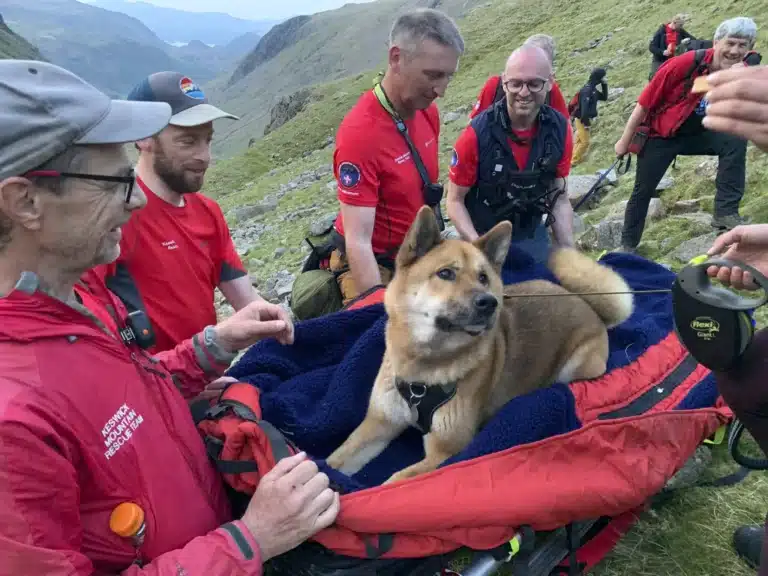
For a mountain emergency in the UK, call 999 or 112, ask for Police, then Mountain Rescue. Give your location or grid reference, details of the incident, number of people and their condition. Phone signal can be unreliable; a charged phone is valuable, but it cannot replace navigation and planning. Keep casualties insulated and sheltered while following the emergency services’ instructions. See Mountain Rescue England and Wales safety advice.
When to choose a lower winter walk
There is no shame in changing plans. A low-level route in a sheltered valley can still give you beautiful winter scenery without committing to England’s highest summit in dangerous conditions. Explore our best winter walks and Routes & Trails for inspiration. Lower routes also need forecast checks, suitable equipment and judgement; they are not automatically risk-free.
If you want to develop winter skills, seek instruction from an appropriately qualified mountaineering professional before attempting snow and ice routes independently.
Frequently asked questions
Can beginners climb Scafell Pike in winter?
Beginners should not tackle a snowy or icy Scafell Pike independently. Winter hillwalking requires additional equipment, navigation skills and hazard awareness. A qualified guide or winter-skills course is a better introduction.
Do I need crampons on Scafell Pike in winter?
That depends on the conditions, not the month. Where the route involves extensive snow or ice, appropriate crampons and an ice axe, compatible boots and the ability to use them may be essential. If you lack those skills, change the objective.
How long does Scafell Pike take in winter?
There is no dependable fixed winter completion time. Snow, ice, route choice, group speed and navigation can significantly prolong a walk. Do not rely on an ordinary-weather estimate to plan daylight or turnaround time.
Is the Wasdale walking GPX suitable for winter?
No GPX track alone establishes a safe winter route. Use our Wasdale walking guide as general background only, and make decisions from current conditions and winter mountaineering expertise.
Make the decision that gets you home
Scafell Pike can be spectacular in winter, but the conditions—not the summit ambition—must dictate your plan. Check specialist forecasts, assess your competence, carry the right equipment, allow for darkness and turn back whenever the margin for safety is shrinking. An enjoyable, safe day lower down is a better outcome than a summit reached at unnecessary risk.

A former British Military Officer, Eddie went on to study History and then Journalism at Sheffield Hallam University. A keen outdoorsman, he has co-written several books on Outdoor Survival and Wild Camping. Now living in Penrith, Ed is a keen fellrunner.