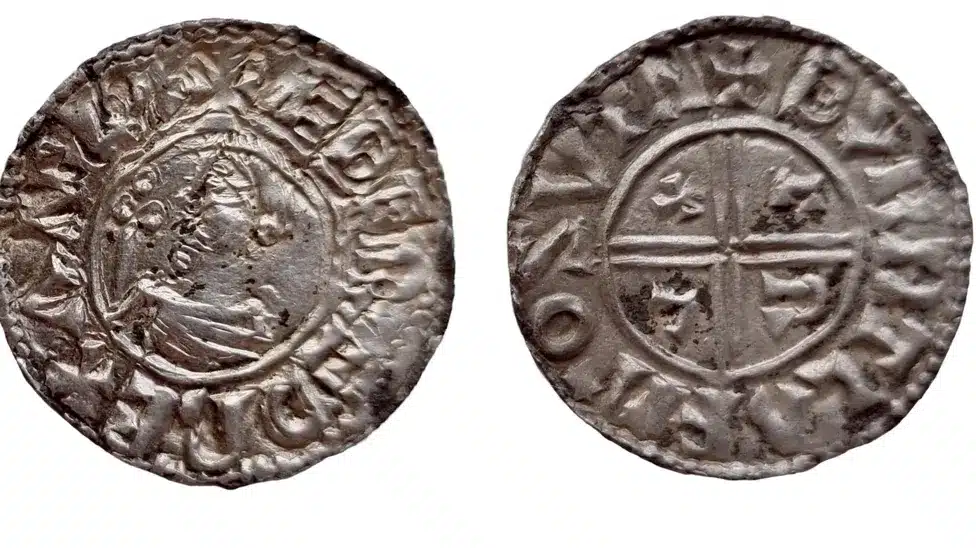
A collection of silver coins dating back to the early medieval period has recently been classified as treasure following an inquest in Cumbria’s Cockermouth Coroners’ Court. Discovered in January 2022 by a local man in the Eden Valley, the coins could potentially originate from as early as AD 976. Museums in Penrith and Carlisle have shown a strong interest in adding this significant find to their collections.
Key Takeaways
- A recently discovered hoard of medieval silver coins has been officially declared as treasure.
- The coins, found in Cumbria, are believed to date to the early medieval period.
- Local museums are seeking to acquire the coins to preserve and study this piece of England’s history.
Viking Raids
During the late 10th century, Viking incursions into England were intensifying, a tumultuous period that ultimately led to the Danish conquest of England. These raids were particularly prevalent during the reign of King Ethelred II, also known as Ethelred the Unready, who ruled from 978 to 1016.
At this time, a significant increase in minting activity resulted in a surge of silver coin production, as evidenced by the discovery of six silver coins in the Eden Valley, suggestive of Scandinavian settlement in the area. They were believed to be from the era of King Ethelred II, aligning with a time of intense Viking activity across the land.
Frequently, the English resorted to making tributary payments to the Vikings, starting with the well-documented tribute from 991 onwards. This was a strategy to avoid plunder and destruction by the marauders who traversed the trans-Pennine route, linking York and the Irish Sea. These routes were often used for transportation and raiding by the seafaring Scandinavians.
The coins found near a crucial route may represent the aftermath of Viking actions, either as lost valuables or as hidden treasure meant to be reclaimed later. The volume of coins circulating at the time further reflects the abundant production of currency during the Viking’s sustained presence in England.
Their legacy, forged in warfare and settlement, left indelible marks on English history, from the Danes in York to the spread of their culture along the British Isles. The Eden Valley discovery offers a glimpse into a pivotal chapter of England’s past, where the interchange between the natives and invaders extended even to the currency of the day.
Buried Treasure
Objects dating back at least three centuries and containing a minimum of 10% precious metals meet the criteria for treasure. The recent find from Eden Valley, comprising medieval silver coins, fulfils these conditions. The local coroner, after evaluation, acknowledged the hoard’s classification as treasure. Acclaim was given to the individual who discovered this significant hoard with a metal detector.
Frequently Asked Questions
Safe Handling and Preservation of Discovered Medieval Coins
To ensure the longevity and historical integrity of medieval coins, they should be carefully handled with clean, dry hands or, ideally, with gloves to prevent oils and dirt from affecting the metal. Coins should be stored in a cool, dry place away from direct sunlight. Acid-free containers or inert materials like Mylar or polyethylene are advisable for long-term storage.
Classification and Dating Techniques for Medieval Coins
Medieval coinage is typically classified and dated using various techniques, including:
- Iconography analysis to identify images and symbols.
- Inscription examination for names, dates, or places.
- Comparison with known dated pieces.
- Metal content assessment through scientific testing.
- Techniques like X-ray fluorescence (XRF) and mass spectrometry.
Largest Currency Denominations During Medieval Times
The largest denominations of currency during the medieval period were gold coins, such as the Florin, Noble, and Ducat. Their high value was due to the scarcity and cost of gold as well as the significant purchasing power they represented.
Common Terminology Related to Medieval Monetary Systems
Here are some common terms associated with medieval monetary systems:
- Penny: The basic unit of currency, often silver.
- Groat: A silver coin worth four pennies.
- Noble: A large gold coin introduced in England.
- Denier: A small silver coin from France, akin to a penny.
- Florin: A gold coin from Florence, Italy, widely circulated.
Importance of Medieval Coin Hoard Discoveries in the UK
Recent discoveries of medieval coin hoards in the UK, such as those in the Eden Valley, are significant for several reasons:
- They provide insights into trade, economy, and currency circulation.
- They offer information about the minting practices and sophistication of monetary systems.
- Such finds can illuminate undiscovered historical events or periods of unrest.
Necessary Steps After Finding a Medieval Coin Hoard
Upon the discovery of a medieval coin hoard, individuals should:
- Not disturb the site further and record the location.
- Contact local authorities and the British Museum for guidance.
- Await archaeological expertise before any further excavation.
- Understand that under the Treasure Act 1996, such finds must be reported to the coroner within 14 days.

Jon is a regular contributor to several outdoor living and lifestyle news publications, concentrating on The Lake District. Now living in Glenridding, Jon studied journalism at Edinburgh University.