More than 200 captive-bred water voles have been released near Haweswater in an effort to establish a healthy colony of the endangered animal in Cumbria.
Conservationists and volunteers transported the semi-aquatic creatures to their new home in temporary soft-release enclosures, allowing them to acclimatise for a few days.
However, ten of the older ones were released immediately into the sea.
The species was common across the UK until it was nearly wiped off in recent decades.
This is the first reintroduction in the Lake District.
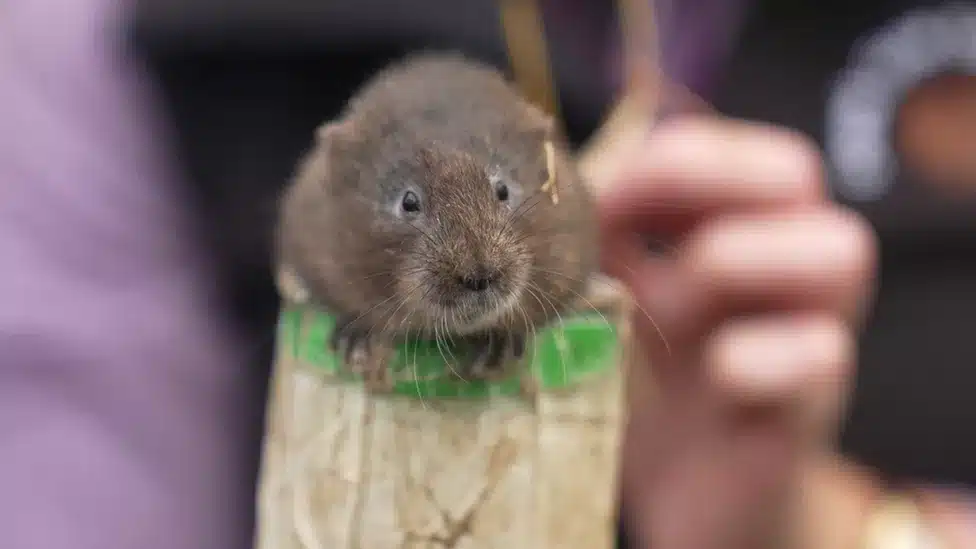
In the next days, volunteers will inspect the enclosures and finally remove them after the newly wild voles have relocated into their own burrows.
This discharge is the result of more than two years of effort by the Royal Society for the Protection of Birds and United Utilities to restore a river valley in the Haweswater Reserve.
According to the organisation, the UK’s estimated water-vole population has dropped from eight million to around 132,000 during the last century, with the species disappearing from 94% of the places it had frequented.
Controlling the number of American mink, which were initially imported to Britain in the 1920s for fur farms, has been one of the most important initiatives in Haweswater.
According to the People’s Trust for Endangered Species, they began fleeing such facilities and reproducing in the wild by the mid-1950s.
Water vole defences were insufficient, such as diving beneath the water and throwing up a mud screen or sheltering in burrows. A female mink may squeeze inside water-vole burrows and wipe out whole colonies and populations along rivers and streams.

According to RSPB conservation specialist Dr Ashely Lyons, the water vole has become a “missing piece” of this landscape.
“Through their burrows, they dig up soil and bring nutrients to the surface, which helps vegetation,” she explained.
“They also nibble plants, allowing other plants to grow through.” And they play a vital role in the food chain. It’s wonderful to have them returning.”
The Eden Rivers Trust, Cumbria Connect, and the Environment Agency will collaborate to release around 350 voles in two places.
Dave Greaves of the Eden Rivers Trust said releasing them into the Cumbrian wilderness was fantastic.
“It’s great to see them back where they belong,” he remarked.

The Lake District, located in the northwest of England, is renowned for its picturesque landscapes, encompassing fells, lakes, and forests. While it draws thousands of tourists annually for its breathtaking sceneries and walks, it is also a haven for a diverse range of wildlife. Among these creatures is the water vole, a fascinating mammal that holds a special place in the region’s ecosystem.
Description and Characteristics
Water voles, also known colloquially as ‘water rats’, are actually Britain’s largest species of vole. They have a robust build, a blunt, rounded nose, small ears, and furry tails. Their thick fur can vary in colour from dark brown to a reddish hue or even black.
Habitat
Water voles generally prefer slow-moving freshwater environments such as rivers, ditches, ponds, and marshes. In the Lake District, they can be found along the banks of lakes and rivers, digging burrows that give them quick access to the water where they find protection from predators.
Diet
These creatures are primarily herbivores, feeding on a wide variety of plants and grasses. Their diet may include roots, stems, and leaves. During the winter, they might consume bark and twigs as well.
Population Decline and Conservation
Tragically, the water vole is one of the UK’s fastest-declining mammals. Habitat loss, water pollution, and predation by the introduced American mink have drastically dropped their numbers. In certain areas, they have disappeared altogether.
The Lake District, with its preserved natural habitats, offers an important refuge for these animals. Efforts by local conservation groups are ongoing to ensure that water voles are protected and their habitats are maintained or even expanded.
Role in the Ecosystem
As primary consumers, water voles play a pivotal role in the ecosystem by converting plant materials into a form predators can consume. They also contribute to the structural diversity of river banks through their burrowing activities, which in turn can help with flood mitigation and support a range of other species.
Cultural Significance
Water voles have garnered attention in British literature and culture. The character ‘Ratty’ from Kenneth Grahame’s “The Wind in the Willows” is often mistakenly thought of as a rat, but he is actually a water vole, emphasizing their gentle and endearing nature.

“One more fell from a great mood…” Chris writes for numerous online publications, having studied at The University College of North Wales, Bangor. He is regularly in The Lake District and enjoys wild camping, hiking and watersports. His favourite location? Muncaster Castle…