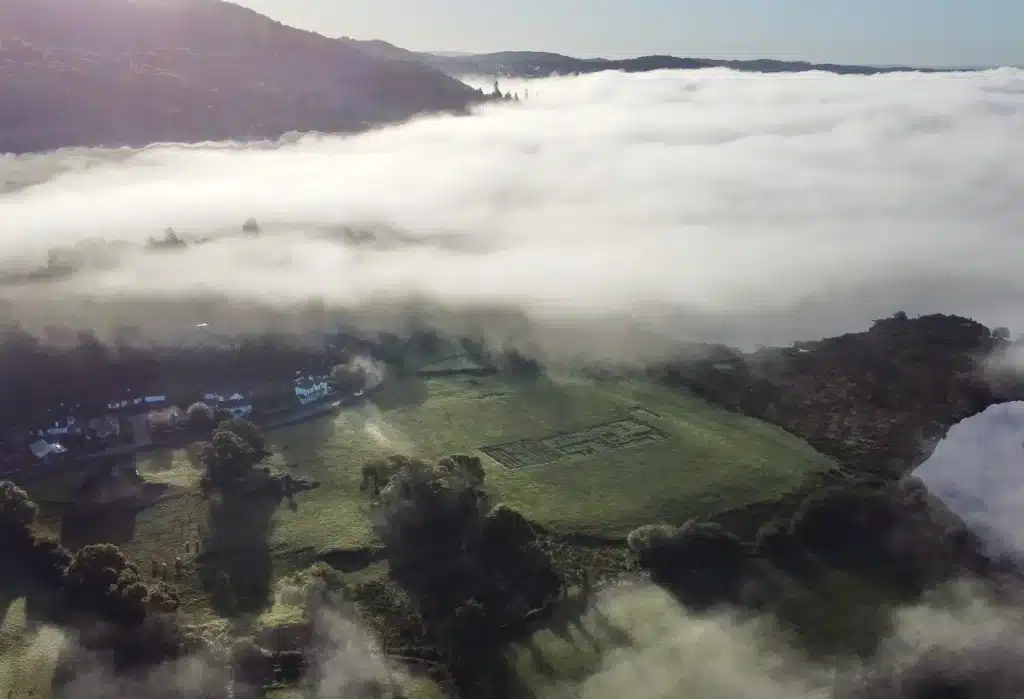
Ambleside is one of the most beautiful Roman forts in Britain, located in the heart of the Lake District on the northern edge of Lake Windermere. This Cumbrian site, most likely occupied between the late first and fourth centuries AD, covers approximately 3 acres on a relatively marshy plateau with a number of rocky outcrops and is flanked on two sides by water (the River Rothay to the west and Lake Windermere to the south).
During the Roman period, Ambleside Fort guarded the road that ran west-east between the port of Ravenglass on the Cumbrian coast (probably the ancient Itunocelum) and the fort of Brougham (Brocavum) near modern Penrith.
Further roads have been proposed from Ambleside to the south (towards the Roman fort of Watercrook near Kendal) and north (towards Carlisle, ancient Luguvalium). Although an identification with Clanoventa has been proposed, it is possible that Ambleside fort was the site of Galava, which is mentioned in the Antonine Itinerary. Whatever its Roman name, the idyllic setting of the stone fort’s ruins makes it an ideal visitor attraction for the many tourists who visit Lake Windermere each year. However, little is known about the site’s more violent periods.
Historical research
While the existence of a Roman fort at Ambleside had long been recognised by antiquarians, systematic excavations at the site did not begin until the second decade of the twentieth century, led by the well-known Oxford-based scholars F Haverfield and R G Collingwood. The latter had a personal connection to the area, having been born near the southern shore of Lake Windermere. Their research, along with subsequent work by archaeologists such as M E Burkett and R Leech in the second half of the twentieth century, revealed the presence of two superimposed Roman forts and an extramural settlement. The majority of these discoveries have been published in the Transactions of the Cumberland and Westmorland Antiquarian and Archaeological Society over the years, and more recently, geophysical surveys and other investigations have added to our understanding of the fort and its surroundings.

Fort finds are currently on display at the Armitt Museum in Ambleside and the Kendal Museum of Natural History and Archaeology, but despite the investigations, research at Ambleside remains comparatively limited. Many details about the fort’s history and occupants are unknown, including the identities of its garrisons.
What can we learn about the site’s past? The first fort at Ambleside was most likely built of turf and timber at the end of the first century AD, possibly after Agricola’s campaigns. The fort was rebuilt in stone decades later, most likely during the reign of Emperor Hadrian (AD 117-138). Previous excavations revealed details about the ramparts, gates, granaries, headquarters, and a portion of the commander’s residence. Within the fort, there were also areas for barracks and possibly stables. Furthermore, traces of a large extramural settlement that extended to the north-east have been discovered.
Ambleside fort could have served as a regional Roman supply base at the crossroads of various roads, benefiting from goods transported by boat through Lake Windermere. The large size of the granaries (horrea) documented in the fort lends credence to the idea that Ambleside served as a regional storage and distribution hub. The fort’s construction would have aided in the consolidation and defence of Roman power in the Lake District since at least the AD 90s, which was especially important in a region that, due to its mountainous topography, could have been more likely to host resistance against the conquerors.
Assault weapons and a tombstone
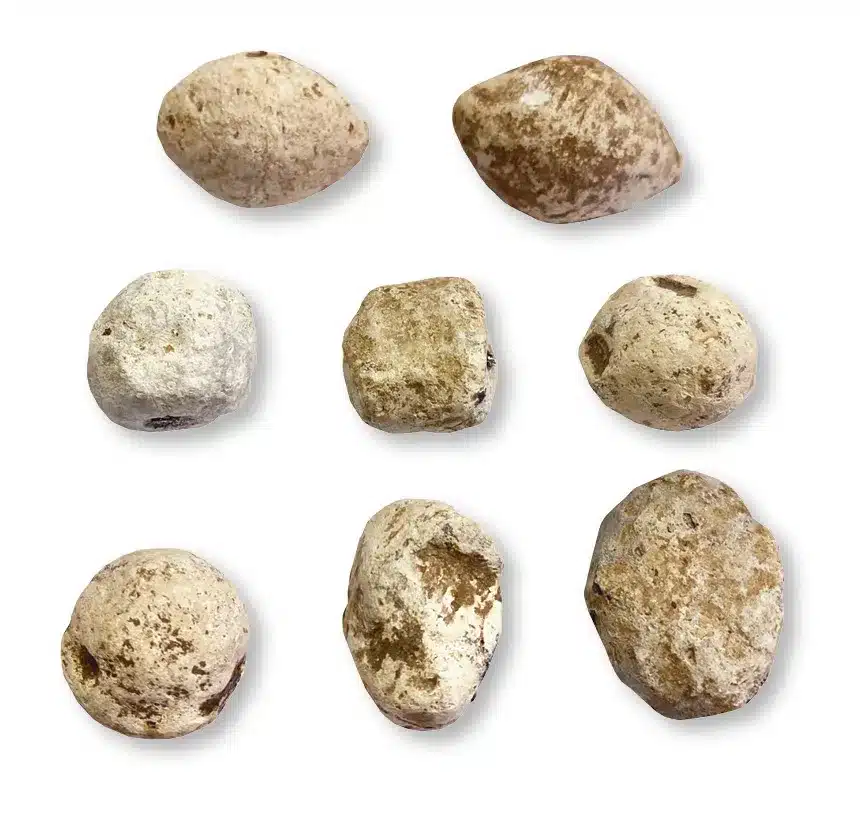
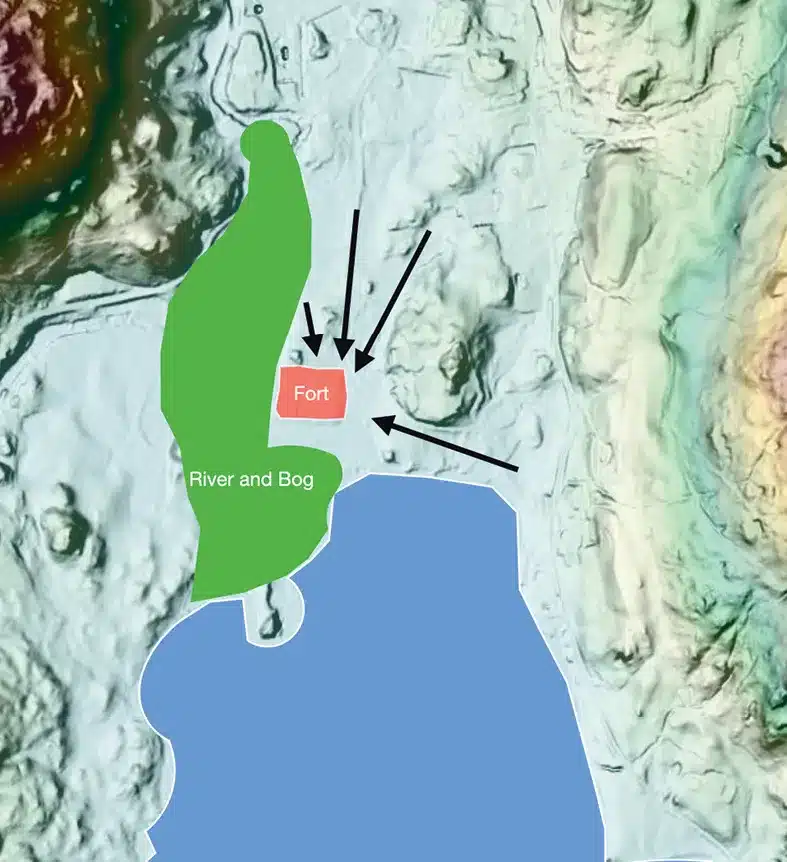
Among the many discoveries made during Collingwood’s excavations in the early twentieth century were some lead sling bullets. More Roman lead sling bullets and a ballista bolt tip were discovered scattered around the fort in later decades, forming a pattern that would be unusual for casual loss or simple storage. According to battlefield archaeology research, a concentrated concentration of sling bullets in the same location usually indicates a storage location, whereas a wide dispersal is more likely to indicate a conflict scenario. The preliminary evidence from examining the distribution of sling bullets at Ambleside points to the fort being attacked from the outside, with the garrison troops defending themselves by shooting missiles outwards. In this context, Haverfield noted that the stratigraphy of the excavated towers seemed to indicate that the fort was destroyed once or twice in the 2nd and/or 3rd centuries AD, though the evidence from the early excavations is not entirely clear in this regard.
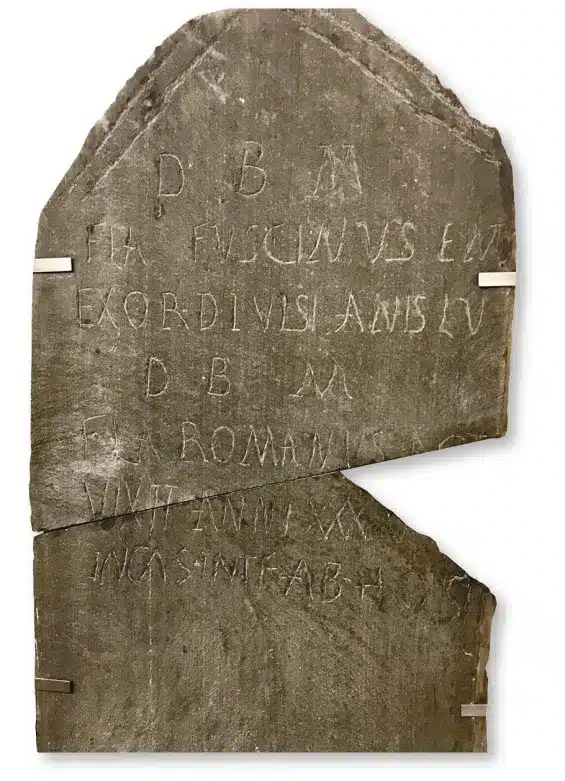
The discovery of an exceptional Roman gravestone outside the fort in the 1960s adds to the evidence of conflict at Ambleside. According to the inscription on the tombstone, one of the deceased was ‘killed in the fort by enemies’ (RIB 3218). There is no other known gravestone in Britain with an inscription detailing this phenomenon, and its text clearly suggests a significant assault on the Ambleside fort – though the fact that the tombstone could be erected suggests that occupation of the fort resumed after the attack.
Recent Investigations
A combination of these different sources of evidence (missiles, tombstone inscription, and possible destruction as indicated by the towers) served as the starting point for a new conflict archaeology research project launched in 2021 as a collaboration between Trimontium Trust members and the University of Edinburgh. So far, the project has gathered and reanalyzed evidence from previous investigations, but it has also used field recording and LiDAR to assess possible assault routes on the fort, as well as non-invasive metal detector surveys in the surrounding area.
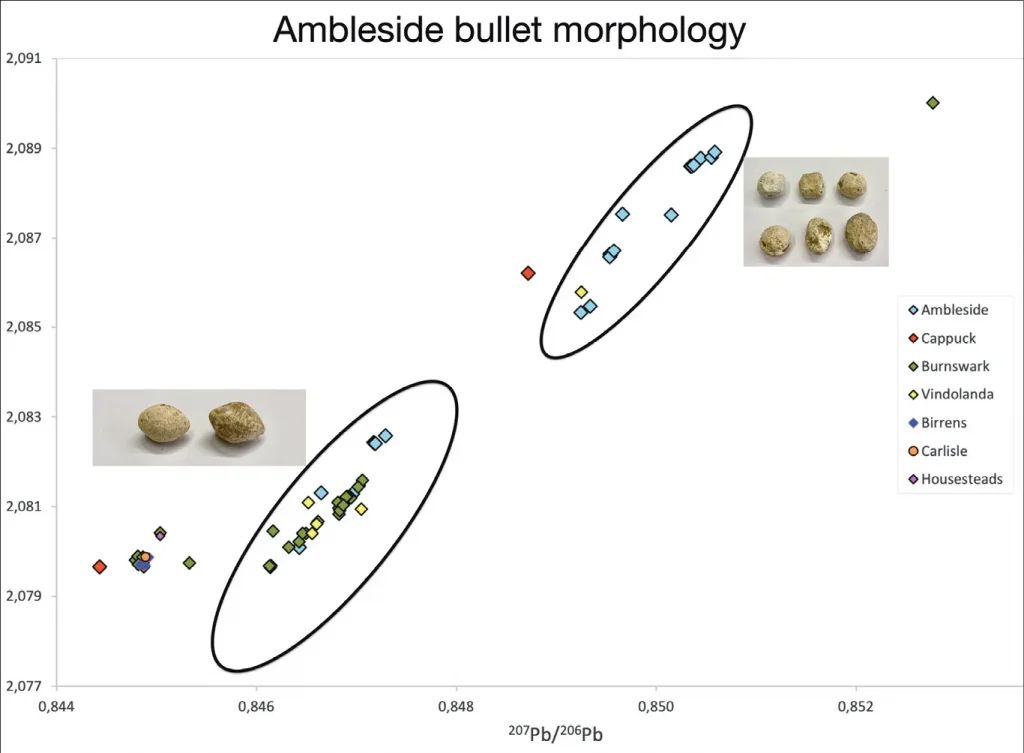
In terms of lead sling bullets, there are 21 known examples from Ambleside, and 18 of them were studied in the Armitt Museum last year. The morphology of these objects allows for the identification of two distinct groups, and microscopic samples of lead were extracted and sent for isotopic analysis. The preliminary findings are very intriguing, as the lead used to make the shot appears to come from two distinct sources that correspond to two distinct morphological groups. The more regular group appears to have close similarities to the bullet shape and lead ore of many of the missiles used by Roman troops at Burnswark around the mid-2nd century AD (see CA 316), whereas the second more irregular group appears to have a more hastily manufactured appearance and an unidentified source.
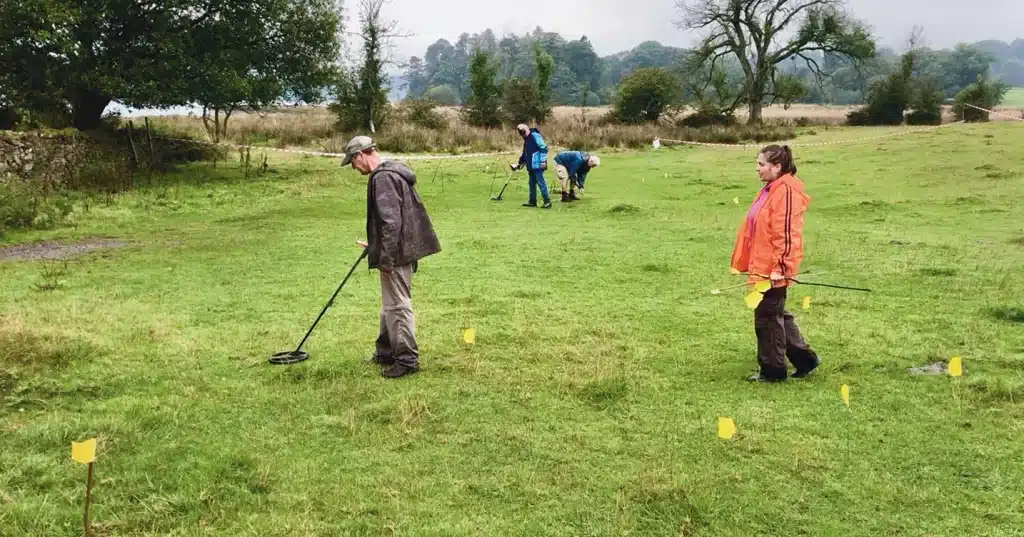
Meanwhile, the survey campaign was completed in September 2021 with the help of Trimontium Trust volunteers. Non-invasive metal detector surveys were conducted in 14 sectors of the site with the help of the National Trust and with permission from Historic England. Seven machines in ‘all metal’ mode were used to ensure the most complete data capture possible, and point data was resurveyed using a single reference detector to ensure metal-profiling conformity. The likely metal type and GPS coordinates were then individually recorded on a survey database to 1m accuracy.
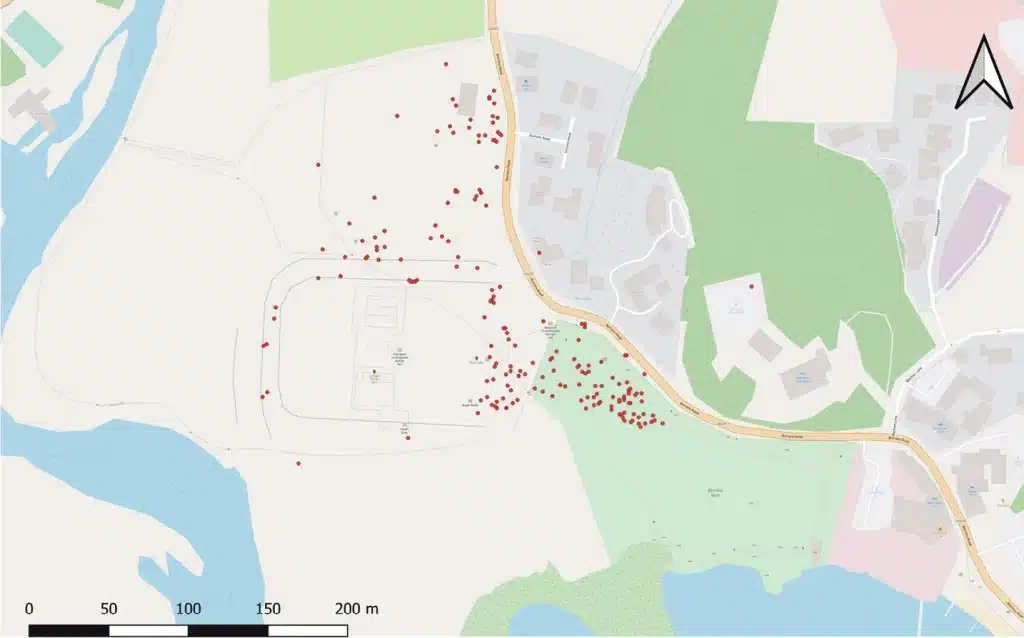
This work produced over 1,000 data points, some of which were undetermined iron signals, leaving over 800 recorded targets. The distribution map of potential lead points shows a wide dispersion of subsurface non-ferrous metal objects. While not all of them would correspond to Roman sling bullets (confounding factors could include Victorian coinage and non-Roman lead debris), a comparison with the fieldwork done at Burnswark Hill in south-west Scotland suggests that a number of them could be Roman projectiles, which would significantly add to the existing ballistic data.
Overall, the evidence at Ambleside points to at least one external enemy attack on the fort, possibly comparable to the situation encountered at the Roman fort at Velsen in the Netherlands. The alleged assault on Velsen occurred in AD 28, when the Frisian tribe revolted in response to excessive taxation by the occupying Roman forces. More than 500 lead sling bullets of various types were discovered outside the fortifications at that location, indicating a strong defensive response by the besieged Roman garrison. The quality of the bullets varied, indicating that many had been made quickly under extremely stressful conditions. At Ambleside, the attackers’ identities are unknown, making it impossible to determine whether they were Lake District residents or Caledonian warriors on a southern incursion. While additional research may help to refine and expand this picture, it appears increasingly likely that Ambleside was the site of a previously forgotten battle in the mists of the Lake District.
Further reading
A V A J Bosman (1995) ‘Pouring lead in the pouring rain: making slingshot under battle conditions’, Journal of Roman Military Equipment Studies 6: 99-103.
D Drury, A Dunwell, C M Clarke, B Dickinson, B Finlayson, L Hird, C L E Howard- Davis, and R Sands (2004) ‘Excavation and watching briefs at Borrans Road, Ambleside 1990-93’, Transactions of the Cumberland and Westmorland Antiquarian and Archaeological Society 4 (series 3): 71-103.
F Haverfield (1915) Roman Britain in 1914 (British Academy Supplemental Papers 3; London: Oxford University Press).
R H Leech (1993) ‘The Roman fort and vicus at Ambleside’, Transactions of the Cumberland and Westmorland Antiquarian and Archaeological Society 93: 51-74.
D C A Shotter (1998) ‘Three Roman forts in the Lake District: Ambleside, Hardknott and Ravenglass’, Archaeological Journal 155: 338-351.

Jon is a regular contributor to several outdoor living and lifestyle news publications, concentrating on The Lake District. Now living in Glenridding, Jon studied journalism at Edinburgh University.