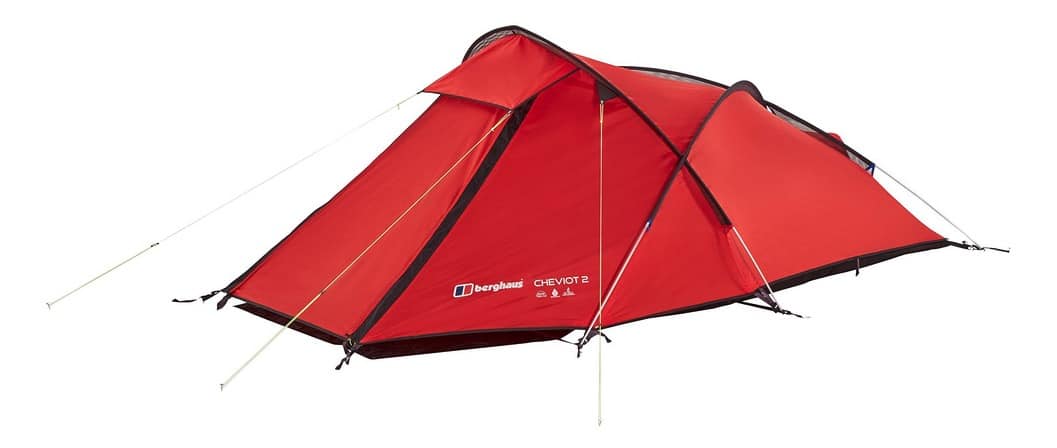
Keeping your pack and tent weight to a bare minimum is essential for any successful camping trip. No one likes carrying more on their back than necessary, so removing superfluous weight from your packing list in any manner you can is essential before heading up the Lake District Fells.
But, of all the gear you carry on the trail, your tent adds the most weight and size to your pack. That begs the issue, how much weight should a backpacking tent be?
A nice hiking tent weights around 2 to 3 pounds per person for a traditional backpacking trip. Having a tent that weighs more than this would only slow you down on the trip. It is feasible to find a tent that weighs less than 2 pounds per person, but these ultralight shelters are costly and unsuitable for a wide range of situations.
However, the outdoor world is divided on how hefty is too heavy for gear. Everyone’s tolerance for extra weight in their pack varies, so it’s critical that you buy the correct gear for your needs. Following that, we’ll go over all you need to know about tent and gear weights so you may be prepared for your next excursion.
What’s the Best Weight for a Backpacking Tent?
A decent hiking tent weighs between 2 and 3 pounds (0.9 and 1.4 kilogrammes) per person.
There is no one “best weight” for a hiking tent because tents are made for a variety of various group sizes. Consider tent weights in terms of weight per person to compare tent weights across a range of sizes.
A decent 2 person hiking tent, for example, should weigh between 4 and 6 pounds (1.8 to 2.7 kg), whereas a 4 person tent should weigh between 8 and 12 lbs (3.6 to 5.4 kg).
How did we come up with these figures?
Pack and gear weight calculations aren’t an exact science because each and every journey is unique.
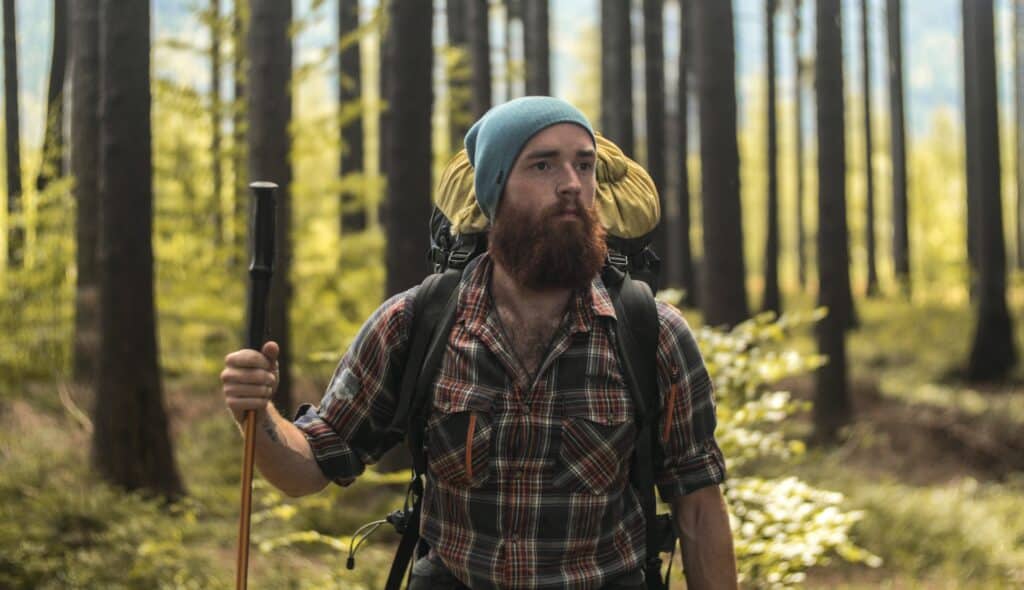
However, unless you’re used to dragging about hefty loads, it’s better not to carry a pack that weighs more than 30% of your body weight. Your pack should ideally be no more than 20% of your body weight. This works out to a maximum pack weight of 45 lbs (20 kg) for a 150 lb (68 kg) individual, but an optimal weight of approximately 30 lbs (14 kg).
From this, we may estimate that most hikers on the Lake District fells carry roughly 2 to 3 pounds (0.9 to 1.4 kg) of food each day. On a 5-day excursion, you may wind up carrying 10 to 15 pounds (4.5 to 6.8 kg) of food. If you’re aiming for an optimal pack weight, it leaves just 15 to 20 pounds (6.8 to 9.1 kg) of weight in your pack for gear (called your base weight).
When you consider the usual weight of summer backpacking gear, that 15 to 20 lb (6.8 to 9.1 kg) of base weight will suddenly go. The usual sleeping bag, for example, weighs around 3 to 5 lbs (1.4 to 2.3 kg). After you’ve accounted for all of your culinary equipment, clothing, and toiletries, there’s not much room left for your tent.
As a result, aiming for a tent that weighs between 2 and 3 lbs (0.9 and 1.4 kg) per person provides the ideal balance of mobility and cost in your kit.
If you’re a petite person or simply prefer ultralight trekking, an even lighter tent may be suitable, even if it comes at a high price. Taller persons or those who don’t mind carrying extra weight might get away with a bigger tent up a peak.
What Weight is Too Much for a Backpacking Tent?
There is no hard and fast rule about what is “too heavy” for a hiking tent. However, on the fells, you should avoid hauling tents that weigh more than 4 pounds per person.
Of course, there’s nothing fundamentally wrong with a large tent, and going for a larger model might save you a lot of money. However, if you’re going on a lengthy camping trip across harsh terrain, that extra weight might have a significant negative influence on your experience.
Everyone and every backpacking trip is different, so if you’re cool with carrying a bigger tent, go for it.
Some people don’t mind carrying a bigger tent since it allows them to save weight in other areas of their gear, such as their sleeping bag. It’s up to you to decide how hefty is too much for your stuff as long as your pack weight is tolerable on the trail.
Backpacking Pack Weight Reduction
To say the least, reducing the weight of your pack when trekking is difficult. There are two basic methods for reducing pack weight:
Considering the Big Picture
In truth, a few items of heavy gear, particularly your tent, sleeping bag, and stove/cook system, account for the majority of your pack’s weight. The most straightforward technique to minimise the weight of your pack is to replace these “big three” components with lighter alternatives. However, because this method may be somewhat costly, it is not suitable for everyone.
Attention to Detail
If you’ve already made your tent, sleeping bag, and cook system as light as possible given your financial limits, it’s time to turn your attention to the specifics of your kit list. This entails searching for minor methods to trim a few ounces from your pack here and there. You may, for example, lose weight by leaving your bowl at home and dining out of your pot. Alternatively, you might repackage your food and toiletries into smaller containers so that you’re just taking the minimal necessities on the route.
Whatever choice you pick, the important thing is to be meticulous with your packing list. Make a list of the equipment you didn’t use after each trip. Consider leaving unneeded stuff (except emergency supplies such as a first aid kit) behind on your next vacation to reduce pack weight.
The Decision
Your camping tent should be as light as feasible in an ideal world. However, because they are either too pricey or too fragile for our purposes, these lightweight tents are unsuitable for many of us.
Check here for our picks of lightweight backpacking tents.
As a result, a reasonable hiking tent weight is between 2 and 3 pounds (0.9 and 1.4 kg) per person. Going over or beyond these parameters is also OK, as long as it is compatible with your gear system. The important thing here is to locate the tent that best suits your needs so that you may be as comfortable as possible on the route.
Here, we look at our favourite lightweight backpacking stoves.

“One more fell from a great mood…” Chris writes for numerous online publications, having studied at The University College of North Wales, Bangor. He is regularly in The Lake District and enjoys wild camping, hiking and watersports. His favourite location? Muncaster Castle…